MBTI Personality Test Guide: Understand Your Type, Cognitive Functions, and Growth
A comprehensive guide to MBTI — Jung's cognitive functions explained, all 16 personality types with stress and growth patterns, how to choose a reliable test, and what no four-letter code can capture.
The Cognitive Science Behind MBTI Testing
From Jung's Typology to the Modern MBTI Test
The MBTI test did not begin with a marketing team or a viral internet quiz. It began with Carl Jung's 1921 work Psychological Types, where he proposed that consciousness operates through four primary functions — thinking, feeling, sensation, and intuition — each of which can be directed inward (introverted) or outward (extraverted). Jung was not writing a self-help framework. He was attempting to map the architecture of psychic energy, drawing on years of clinical observation and his own confrontation with what he called the 'confrontation with the unconscious.'
Two decades later, Katharine Cook Briggs and her daughter Isabel Briggs Myers encountered Jung's work and began translating it into a practical instrument. Their motivation was not commercial. During the Second World War, they observed that many people were being placed in war-industry roles that mismatched their natural dispositions, and they believed a typology instrument could reduce suffering and improve productivity. The first MBTI test was published in 1944. The forced-choice format, the four dichotomies, and the sixteen-type matrix were all engineering choices designed to make Jung's clinical theory measurable at scale.
What this lineage means is consequential: the MBTI test is not a personality theory invented whole. It is an operationalization of a deeper cognitive model. When critics attack the four-letter code as if it were the entire theory, they are attacking the user interface rather than the underlying architecture. The four letters are a compression of a richer cognitive function stack — a stack we explore in detail in our article on cognitive functions in relationships. Understanding this distinction is the first step toward using an MBTI diagnosis intelligently rather than superstitiously.
How MBTI Differs Methodologically from Big Five, DISC, and Enneagram
A common question — which personality framework should I trust — requires understanding that these systems measure different things in different ways. The Big Five (OCEAN) is the gold standard in academic psychology because it measures personality as continuous traits along five dimensions, each independently validated through factor analysis. Big Five scores form a normal distribution, which is statistically tractable and predicts outcomes like job performance and longevity with measurable accuracy.
MBTI takes a different methodological stance. Rather than placing you on a continuum, it categorizes you into one of sixteen types based on four dichotomies. This categorical approach trades psychometric precision for cognitive portability — a four-letter code is easier to remember and discuss than five percentile scores. DISC measures behavioral style in a specific context (usually workplace communication) and is explicitly situational, while the Enneagram describes core motivational fears and desires rather than cognitive processing style.
The implication is that no single framework is 'correct.' They are lenses with different focal lengths. MBTI is uniquely useful for understanding how someone takes in information and makes decisions — the cognitive layer — while Big Five is better for predicting statistical outcomes and Enneagram is better for excavating motivational patterns. A sophisticated self-understanding uses several frameworks in dialogue rather than treating any one as a complete portrait.
Why MBTI Uses Forced-Choice Questions
If you have ever taken an MBTI test and been asked to choose between two equally appealing options — 'I prefer spending time with a few close friends' versus 'I prefer large social gatherings' — you have encountered the forced-choice format. This is not laziness on the part of test designers. Forced-choice questions are a deliberate methodological choice designed to counteract two well-documented biases in self-report measurement: the central tendency bias (where respondents avoid extremes) and the social desirability bias (where respondents choose the answer that makes them look good).
By forcing a choice between two statements of roughly equal social value, the format compels respondents to reveal a genuine preference rather than hedging. The trade-off is that forced-choice questions lose granularity — they cannot measure the strength of a preference, only its direction. This is one reason MBTI scores are sometimes unstable for people near the midpoint of a dichotomy. Someone who is genuinely 51% introverted and 49% extraverted may flip between INTP and ENTP across multiple test administrations without any actual personality change.
Modern MBTI tests, including the official MBTI assessment distributed by The Myers-Briggs Company, attempt to mitigate this by adding a confidence or strength rating to each item. Free online tests, including the popular 16Personalities test, often skip this step in the interest of brevity — which is one reason free results can feel less stable. We will return to this when we discuss how to choose an MBTI test.
The Reliability and Validity Debate: What Critics Get Right and Wrong
The academic critique of MBTI is well known and partially correct. Test-retest reliability studies show that approximately 50% of people receive a different four-letter code when retested within five weeks. The dichotomies correlate strongly with Big Five dimensions (Introversion-Extraversion with Big Five Extraversion, Intuition-Sensing with Openness, Thinking-Feeling with Agreeableness, Judging-Perceiving with Conscientiousness), which means MBTI is measuring something real but discarding the magnitude information that Big Five preserves.
What critics often get wrong, however, is the assumption that low test-retest reliability invalidates the underlying theory. Jung's framework was never about static categories — it was about dynamic patterns of psychic energy. The cognitive function stack describes a developmental trajectory, not a fixed identity. A 25-year-old INTP whose inferior extraverted feeling (Fe) is beginning to emerge may genuinely answer feeling-related items differently at 35, not because their type changed, but because their relationship to their own function stack matured. We explore this developmental reality in Section 4.
The more honest critique is not that MBTI is invalid, but that it is frequently misused as a fixed identity label when it was designed as a developmental map. The framework's persistence in corporate training, couples counseling, and self-discovery contexts — despite academic skepticism — is itself evidence that it captures something people find useful, even if that something is not what a psychometrician would call 'trait measurement.'
Why MBTI Persists Despite Academic Criticism
Practical utility and psychometric purity are not the same thing. A framework can be statistically imperfect and still generate useful insight, in the same way that a hand-drawn map can be more useful than satellite coordinates for navigating a specific neighborhood. MBTI persists because it offers something Big Five does not: a vocabulary for cognitive process that is granular enough to be useful and memorable enough to be applied.
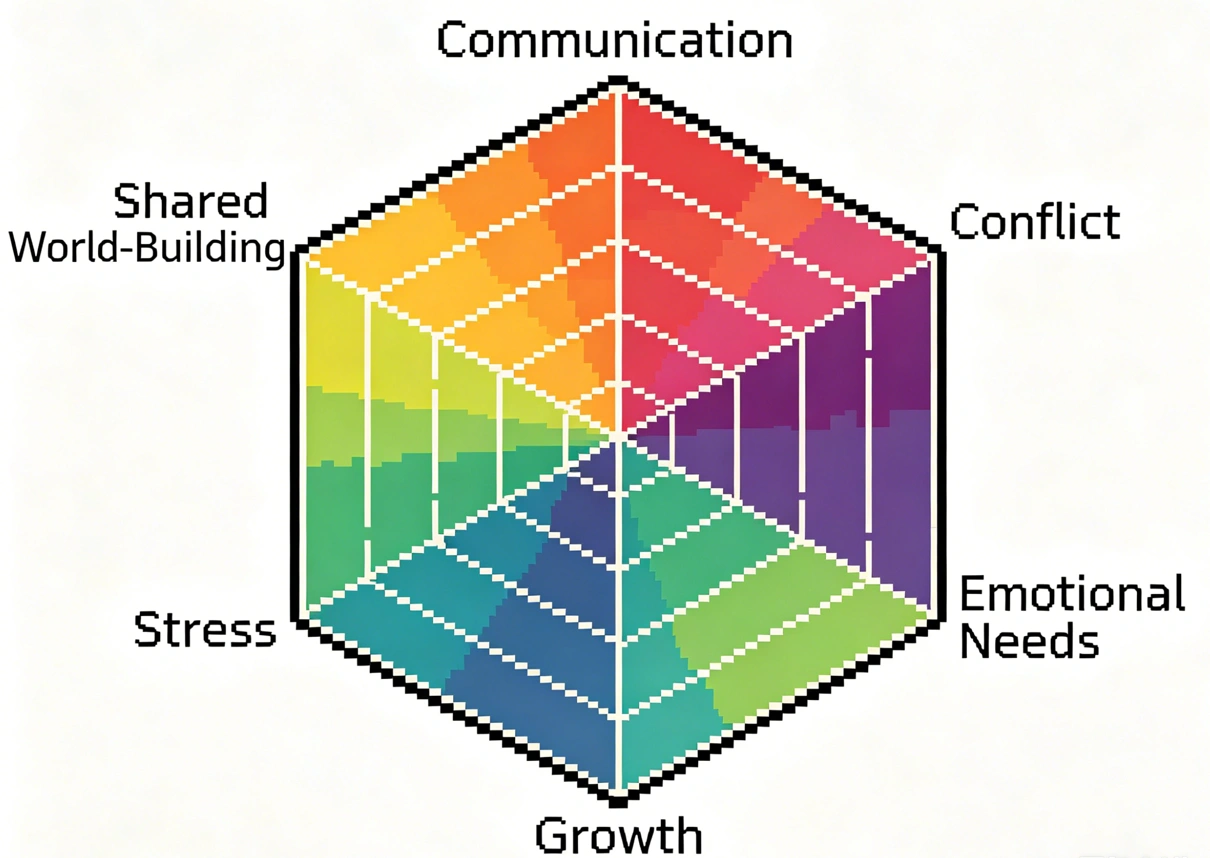
When an INTP says 'my inferior Fe is acting up,' they are communicating something specific and actionable about their internal state — a state that a Big Five percentile score cannot describe. When a couple learns that one partner leads with introverted sensing and the other with extraverted intuition, they gain a shared language for a recurring friction pattern that previously felt like a character flaw. This is the practical utility that keeps MBTI relevant, and it is the reason our MBTI compatibility test uses cognitive function analysis rather than letter matching. If you're interested in how these cognitive patterns play out in real relationships, our MBTI compatibility test analyzes function stack interactions across communication, conflict, and emotional needs.
How to Choose an MBTI Test
The Problem with "Official" Versus Free MBTI Tests
The question of which MBTI test to take is asked by millions of people every month around the world. The honest answer is more complicated than "pay for the official one." The Myers-Briggs Company licenses the official MBTI assessment, which is administered by certified practitioners and typically costs between $50 and $200. This assessment has the strongest psychometric backing, including item analysis and norming studies, but it is also inaccessible to most casual users.
Free MBTI tests proliferate because the underlying theory is in the public domain and the demand is enormous. The problem is that free tests vary wildly in quality. Some are carefully constructed instruments that approximate the official assessment's logic. Others are ten-question quizzes designed primarily to maximize ad impressions. The user has no easy way to tell the difference from the landing page, which is why understanding what makes a good MBTI test matters.
Why 16Personalities Became Dominant — and Its Methodological Compromises
16Personalities is the most widely taken MBTI-adjacent test in the world, with tens of millions of completions per year. Its dominance is deserved in one sense: the test is well-designed visually, free, fast, and produces a result that feels specific and insightful. The site's type descriptions are among the best-written in the popular MBTI space.
What 16Personalities does not advertise is that it is not strictly an MBTI test. It uses the four-letter MBTI codes as labels but actually measures five dimensions — adding a fifth 'Identity' scale (Assertive vs Turbulent, denoted -A or -T) borrowed loosely from neuroticism research. The underlying scoring is closer to a Big Five instrument mapped onto MBTI labels than to a Jungian cognitive function assessment. This is not inherently bad — it produces useful results — but it means that 16Personalities types are not directly equivalent to MBTI types as understood by Jungian theory.
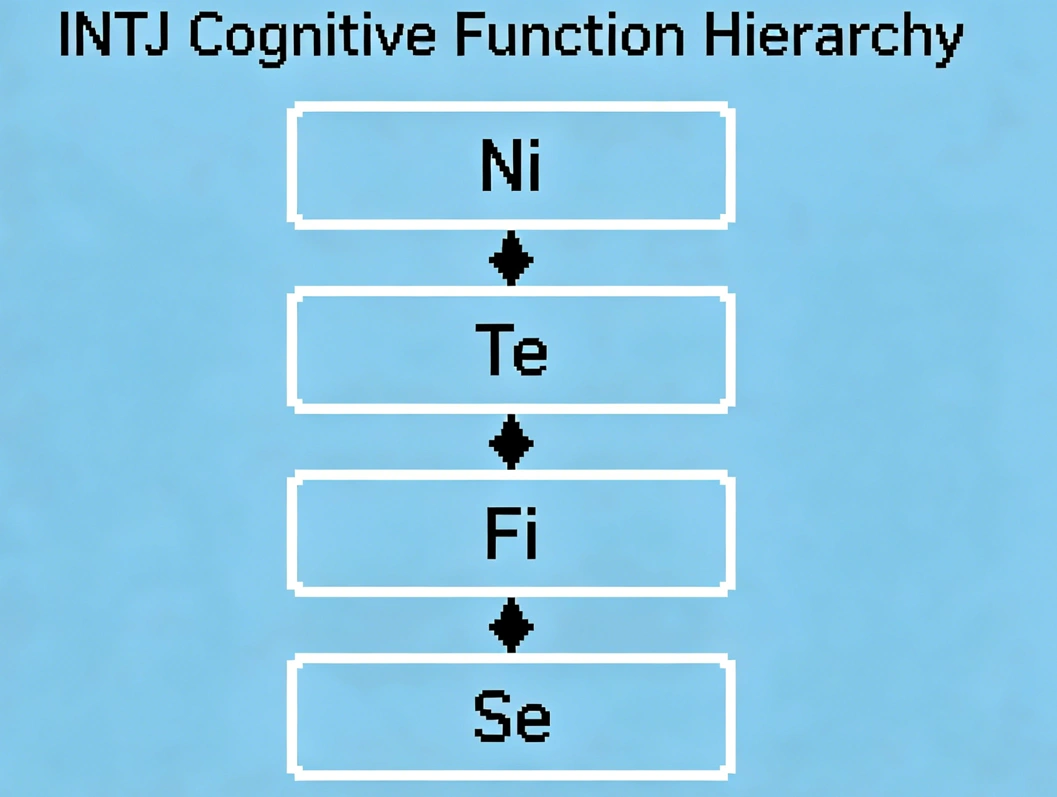
The methodological compromise is significant for users who want to apply cognitive function analysis. A 16Personalities 'INTJ-A' may or may not have the Ni-Te-Fi-Se cognitive function stack that defines an INTJ in Jungian terms. If you plan to use your type result for compatibility analysis, career planning, or deeper self-development work that depends on the function stack, you need a test that actually infers cognitive functions rather than mapping Big Five scores onto MBTI labels.
What Makes a Good MBTI Test: Dichotomy Scoring Versus Cognitive Function Inference
There are two broad approaches to MBTI test construction. The first, dichotomy scoring, asks questions that directly probe each of the four dichotomies (E-I, S-N, T-F, J-P) and assigns a type based on which side of each dichotomy you fall. This is the approach used by the official MBTI assessment and by most free tests. It is straightforward and reasonably reliable for people with clear preferences, but it treats the four letters as the primary data — which, as we have seen, is a compression of the underlying cognitive function stack.
The second approach, cognitive function inference, asks questions designed to surface which cognitive functions you actually use and in what order. A question like 'When facing a new problem, do you prefer to brainstorm multiple possibilities or identify the single most likely outcome?' is probing the difference between extraverted intuition (Ne) and introverted intuition (Ni) — not just the S-N dichotomy. This approach is harder to construct well but produces results that map more directly onto Jungian theory and that are more useful for compatibility and development work.
A genuinely good MBTI test combines both approaches: dichotomy scoring for stability and cognitive function inference for depth. It also reports confidence intervals so you know whether you are clearly one type or sitting near a boundary. If a test gives you a single four-letter code with no indication of how strong each preference is, that is a red flag.
Red Flags in MBTI Tests
Several warning signs indicate a test is more entertainment than assessment. Tests under 30 questions rarely have enough items to measure four dichotomies reliably — the official MBTI assessment uses 93 items for a reason. Tests with only binary extremes ('You are either a thinker or a feeler') ignore the reality that most people sit somewhere in the middle of most dimensions. Tests with no situational context ('Do you like parties?') measure surface behavior rather than cognitive preference, which is why they produce unstable results.
Other red flags include tests that ask for an email before showing results (often a data-harvesting pattern), tests that present type descriptions before you answer (priming your responses), and tests that promise specific career or relationship recommendations based solely on your four letters. None of these necessarily mean the test is useless, but they suggest the test's primary goal is not accurate personality measurement.
How to Interpret Your Results Across Multiple Tests
A practical approach for serious users is to take several MBTI tests and look for the pattern rather than trusting any single result. If three different tests consistently return INTP, you are probably an INTP. If you get INTP on one test, INTJ on another, and INFP on a third, the most likely explanation is that you sit near the boundary between thinking and feeling and between judging and perceiving — in which case your cognitive function stack is more informative than your four-letter code.
Pay attention to which questions felt difficult to answer. The items where you genuinely could not choose between two options often mark the boundary between two cognitive functions in your stack, and they are more diagnostic than the items you answered confidently. If you want a deeper analysis of how your specific function stack interacts with another person's, our MBTI compatibility test examines function-level dynamics rather than relying on letter matching. For a comprehensive assessment that goes beyond type identification, our free MBTI compatibility test examines how your cognitive functions interact with others across multiple dimensions.
The 16 Personality Types — A Complete List
This section covers all sixteen MBTI types, organized by Kiersey's four temperaments — Analysts, Diplomats, Sentinels, and Explorers — which group types by shared cognitive characteristics. For each type, we describe core cognitive patterns, stress responses, developmental trajectories across the lifespan, and the most common misidentifications.
The Analysts (NT Types)
INTJ — The Architect: The INTJ leads with introverted intuition (Ni), a function that synthesizes information into long-range internal visions. Where extraverted intuition branches outward into possibilities, Ni converges inward into a single trajectory, which is why INTJs are often described as seeing where things are heading before others do. The auxiliary extraverted thinking (Te) organizes the external world to execute that vision, while tertiary introverted feeling (Fi) provides a private moral compass and inferior extraverted sensing (Se) remains the least developed function.
Under stress, the INTJ's inferior Se can erupt in uncharacteristic sensory indulgence — binge eating, reckless spending, obsessive attention to physical details — or in paranoid hypervigilance about the external environment. The famous 'INTJ grip' is the experience of being trapped in this inferior function state. Developmentally, INTJs tend to integrate their tertiary Fi in their thirties and forties, becoming more attuned to personal values and less purely strategic. They are most commonly misidentified as INTP, particularly when their Te is underdeveloped and they present as more purely analytical than execution-oriented.
INTP — The Logician: The INTP leads with introverted thinking (Ti), a function that builds internal logical frameworks and seeks precise definitions. Where Te organizes the external world, Ti organizes the internal world, which is why INTPs are often more interested in understanding how something works than in deploying it. The auxiliary extraverted intuition (Ne) generates possibilities for the Ti engine to evaluate, tertiary extraverted feeling (Fe) provides a rudimentary social awareness, and inferior extraverted sensing (Se) is the least developed function.
Under stress, INTPs can fall into what is sometimes called 'Fe grip' — uncharacteristic emotional outbursts, obsessive concern with how others perceive them, or sudden sensitivity to social rejection. Developmentally, INTPs often integrate their tertiary Fe in their thirties, becoming warmer and more socially adept without losing their analytical core. They are most commonly misidentified as INTJ when their Ne is well-developed and they present as more visionary than purely logical, or as INFP when their Ti framework is values-adjacent.
ENTJ — The Commander: The ENTJ leads with extraverted thinking (Te), a function that organizes external systems for efficiency and measurable outcomes. ENTJs are natural executives not because they crave power for its own sake, but because they see inefficiency as a problem to be solved and are willing to take responsibility for solving it. The auxiliary introverted intuition (Ni) provides strategic foresight, tertiary introverted feeling (Fi) is a private moral sense that develops later in life, and inferior introverted sensing (Si) is the least developed function.
Under stress, ENTJs can fall into 'Fi grip' — uncharacteristic brooding, sudden moral judgments, or hypersensitivity to perceived personal attacks. This is jarring because the dominant Te persona is usually decisive and impersonal. Developmentally, ENTJs integrate their tertiary Fi in midlife, becoming more reflective and less purely results-driven. They are most commonly misidentified as ESTJ when their Ni is underdeveloped, or as ENTP when their Te is masked by a more playful social presentation.
ENTP — The Debater: The ENTP leads with extraverted intuition (Ne), a function that explores possibilities, patterns, and connections in the external world. ENTPs are often described as idea people — not because they have more ideas than other types, but because they are energized by surfacing and testing ideas in conversation. The auxiliary introverted thinking (Ti) evaluates those ideas for internal consistency, tertiary extraverted feeling (Fe) provides social agility, and inferior introverted sensing (Si) is the least developed function.
Under stress, ENTPs can fall into 'Si grip' — obsessive attention to detail, rumination on past failures, or sudden rigidity about routines and physical environment. This contrasts sharply with their usual expansive, possibility-oriented mode. Developmentally, ENTPs integrate their tertiary Fe in their thirties, becoming more attuned to social impact and less purely argumentative. They are most commonly misidentified as ENFP when their Ti is underdeveloped, or as ENTJ when their Ne is channeled into a specific venture.
The Diplomats (NF Types)
INFJ — The Advocate: The INFJ leads with introverted intuition (Ni), the same convergent function that defines INTJs, but directed through an auxiliary extraverted feeling (Fe) that reads and harmonizes with others' emotional states. This combination produces the famous INFJ paradox: deeply private individuals who are also unusually attuned to the emotional atmosphere around them. Tertiary introverted thinking (Ti) provides analytical backup, and inferior extraverted sensing (Se) is the least developed function.
Under stress, INFJs can fall into 'Se grip' — sensory overload, impulsive behavior, or obsessive engagement with the physical world in ways that feel alien to their usual introspective mode. Developmentally, INFJs integrate their tertiary Ti in their thirties and forties, becoming more analytically grounded and less purely intuitive. They are the rarest of the sixteen types by most estimates, which contributes to their mystique — and to frequent misidentification. They are most commonly mistaken for INFP (when their Fe is muted) or INTJ (when their Ti is well-developed).
INFP — The Mediator: The INFP leads with introverted feeling (Fi), a function that processes decisions through a deeply personal value system. Where Fe harmonizes with external emotional states, Fi maintains internal authenticity — which is why INFPs are often described as the most genuinely themselves of any type. The auxiliary extraverted intuition (Ne) generates possibilities, tertiary introverted sensing (Si) provides personal memory and tradition, and inferior extraverted thinking (Te) is the least developed function.
Under stress, INFPs can fall into 'Te grip' — harsh criticism, obsessive list-making, or sudden demands for efficiency that feel out of character. Developmentally, INFPs integrate their tertiary Si in midlife, becoming more grounded in personal history and routine. They are most commonly misidentified as INFJ (when their Ne is well-developed and they present as visionary) or as ISFP (when their Ne is muted and they present as more purely aesthetic).
ENFJ — The Protagonist: The ENFJ leads with extraverted feeling (Fe), a function that reads and shapes the emotional atmosphere of groups. ENFJs are natural leaders not because they seek authority, but because they are unusually skilled at aligning group energy toward shared purpose. The auxiliary introverted intuition (Ni) provides long-range vision, tertiary introverted thinking (Ti) develops later as analytical backup, and inferior introverted sensing (Si) is the least developed function.
Under stress, ENFJs can fall into 'Ti grip' — harsh logical criticism of themselves and others, obsessive analysis, or sudden emotional withdrawal. Developmentally, ENFJs integrate their tertiary Ti in midlife, becoming more analytically discerning and less purely relational. They are most commonly misidentified as ESFJ (when their Ni is underdeveloped) or as ENFP (when their Fe is masked by a more playful presentation).
ENFP — The Campaigner: The ENFP leads with extraverted intuition (Ne), the same expansive possibility function that defines ENTPs, but directed through an auxiliary introverted feeling (Fi) that filters possibilities through personal values. ENFPs are often described as the most introverted extraverts — their Ne is extraverted, but their Fi requires significant internal processing. Tertiary extraverted thinking (Te) provides organizational backup, and inferior introverted sensing (Si) is the least developed function.
Under stress, ENFPs can fall into 'Si grip' similar to ENTPs — obsessive detail orientation, rumination on the past, or sudden rigidity. Developmentally, ENFPs integrate their tertiary Te in their thirties, becoming more capable of executing on their ideas rather than just generating them. They are most commonly misidentified as ENTP (when their Fi is muted) or as INFJ (when their Ne is well-developed and they present as visionary).
The Sentinels (SJ Types)
ISTJ — The Logistician: The ISTJ leads with introverted sensing (Si), a function that compares present experiences to an internal database of past experiences. This is the source of the ISTJ reputation for reliability and tradition — they navigate by what has worked before. The auxiliary extraverted thinking (Te) organizes the external world efficiently, tertiary introverted feeling (Fi) provides a private moral compass, and inferior extraverted intuition (Ne) is the least developed function.
Under stress, ISTJs can fall into 'Ne grip' — catastrophic worst-case scenario thinking, paranoia about future possibilities, or sudden attraction to unconventional ideas. Developmentally, ISTJs integrate their tertiary Fi in midlife, becoming more attuned to personal values and less purely duty-driven. They are most commonly misidentified as INTJ (when their Te is well-developed and they present as more strategic) or as ISFJ (when their Te is muted and they present as more caretaking).
ISFJ — The Defender: The ISFJ leads with introverted sensing (Si), the same function as ISTJ, but directed through an auxiliary extraverted feeling (Fe) that attends to others' needs. ISFJs are often described as the caretakers of the type system — not because they are passive, but because their Si-Fe combination produces a deep attentiveness to the specific needs of specific people based on what has worked before. Tertiary introverted thinking (Ti) provides analytical backup, and inferior extraverted intuition (Ne) is the least developed function.
Under stress, ISFJs can fall into 'Ne grip' similar to ISTJs — catastrophic thinking, anxiety about future possibilities, or sudden attraction to ungrounded ideas. Developmentally, ISFJs integrate their tertiary Ti in midlife, becoming more analytically discerning and less purely accommodating. They are most commonly misidentified as INFJ (when their Si presents as intuition) or as ESFJ (when their Fe is dominant in social presentation).
ESTJ — The Executive: The ESTJ leads with extraverted thinking (Te), the same function as ENTJ, but directed through an auxiliary introverted sensing (Si) that grounds decisions in established precedent. ESTJs are natural administrators — they organize external systems according to proven standards. Tertiary introverted feeling (Fi) develops later as a private moral sense, and inferior introverted intuition (Ni) is the least developed function.
Under stress, ESTJs can fall into 'Fi grip' — uncharacteristic moralizing, sudden sensitivity to perceived personal slights, or brooding on whether they have been treated fairly. Developmentally, ESTJs integrate their tertiary Fi in midlife, becoming more attuned to personal values and less purely rule-driven. They are most commonly misidentified as ENTJ (when their Si is muted and they present as more visionary) or as ESTP (when their Te is masked by a more action-oriented presentation).
ESFJ — The Consul: The ESFJ leads with extraverted feeling (Fe), the same function as ENFJ, but directed through an auxiliary introverted sensing (Si) that grounds social harmony in established tradition. ESFJs are the social glue of many communities — they remember birthdays, organize gatherings, and maintain the relational fabric. Tertiary introverted thinking (Ti) develops later as analytical backup, and inferior introverted intuition (Ni) is the least developed function.
Under stress, ESFJs can fall into 'Ti grip' — harsh logical criticism, obsessive analysis of others' motives, or sudden emotional withdrawal. Developmentally, ESFJs integrate their tertiary Ti in midlife, becoming more discerning and less purely accommodating. They are most commonly misidentified as ENFJ (when their Si is muted and they present as more visionary) or as ISFJ (when their Fe is more reserved in social presentation).
The Explorers (SP Types)
ISTP — The Virtuoso: The ISTP leads with introverted thinking (Ti), the same function as INTP, but directed through an auxiliary extraverted sensing (Se) that engages directly with the physical world. ISTPs are often described as the craftsmen and mechanics of the type system — they understand systems by taking them apart and putting them back together. Tertiary introverted intuition (Ni) provides gut-level insight, and inferior extraverted feeling (Fe) is the least developed function.
Under stress, ISTPs can fall into 'Fe grip' — uncharacteristic emotional outbursts, sudden concern with social perception, or hypersensitivity to rejection. Developmentally, ISTPs integrate their tertiary Ni in midlife, becoming more attuned to long-term patterns and less purely reactive. They are most commonly misidentified as INTP (when their Se is muted and they present as more purely analytical) or as ESTP (when their Ti is masked by a more action-oriented presentation).
ISFP — The Adventurer: The ISFP leads with introverted feeling (Fi), the same function as INFP, but directed through an auxiliary extraverted sensing (Se) that engages with the aesthetic and physical world. ISFPs are often described as the artists of the type system — their Fi-Se combination produces a deep attunement to personal values expressed through sensory experience. Tertiary introverted intuition (Ni) provides gut-level insight, and inferior extraverted thinking (Te) is the least developed function.
Under stress, ISFPs can fall into 'Te grip' — harsh criticism, obsessive organization, or sudden demands for efficiency. Developmentally, ISFPs integrate their tertiary Ni in midlife, becoming more attuned to long-term patterns and less purely present-focused. They are most commonly misidentified as INFP (when their Se is muted and they present as more purely imaginative) or as ISTP (when their Fi is masked by a more analytical presentation).
ESTP — The Entrepreneur: The ESTP leads with extraverted sensing (Se), a function that engages directly with the present moment and physical environment. ESTPs are often described as the doers of the type system — they act first and analyze later, which makes them natural entrepreneurs and crisis responders. The auxiliary introverted thinking (Ti) evaluates actions for internal consistency, tertiary extraverted feeling (Fe) provides social agility, and inferior introverted intuition (Ni) is the least developed function.
Under stress, ESTPs can fall into 'Ni grip' — paranoid pattern-finding, catastrophic projection, or sudden attraction to mystical interpretations. Developmentally, ESTPs integrate their tertiary Fe in midlife, becoming more attuned to social impact and less purely action-oriented. They are most commonly misidentified as ENTP (when their Se is muted and they present as more idea-oriented) or as ESFP (when their Ti is masked by a more relational presentation).
ESFP — The Entertainer: The ESFP leads with extraverted sensing (Se), the same function as ESTP, but directed through an auxiliary introverted feeling (Fi) that filters experience through personal values. ESFPs are often described as the performers of the type system — their Se-Fi combination produces a charismatic presence attuned to the emotional resonance of the moment. Tertiary extraverted thinking (Te) provides organizational backup, and inferior introverted intuition (Ni) is the least developed function.
Under stress, ESFPs can fall into 'Ni grip' similar to ESTPs — paranoid pattern-finding, catastrophic projection, or sudden attraction to conspiracy thinking. Developmentally, ESFPs integrate their tertiary Te in midlife, becoming more capable of executing on their visions rather than just performing them. They are most commonly misidentified as ENFP (when their Se is muted and they present as more idea-oriented) or as ESTP (when their Fi is masked by a more action-oriented presentation).
Type Development Across the Lifespan
Jung's Individuation Process and MBTI Type Development
Jung's concept of individuation — the lifelong process of becoming a complete self — maps directly onto MBTI type development in a way that is often overlooked in popular discussions. Jung proposed that the first half of life is dominated by the dominant and auxiliary functions: we build an identity around our strengths and use our secondary function to support that identity. The second half of life, in Jung's view, is when the inferior and tertiary functions begin to demand integration — a process that is often uncomfortable but psychologically necessary.
Translated into MBTI terms, this means that a young INTJ operates primarily from Ni and Te — building visions and executing them. In midlife, the inferior Se and tertiary Fi begin to assert themselves, demanding that the INTJ attend to sensory experience and personal values that were previously sidelined. This is not a type change. It is the natural developmental arc that Jung described, and it explains why an INTJ at 45 can feel like a different person from the INTJ at 25 — even though the underlying function stack is identical.
Why Your Type Feels Different at 25 Versus 45
The experience of 'feeling like a different type' at different life stages is one of the most common reasons people question their MBTI results. A 25-year-old ENTP who has not yet integrated their tertiary Fe may present as purely argumentative and possibility-driven — fitting the 'Debater' stereotype. The same ENTP at 45, having integrated Fe and begun to engage their inferior Si, may present as warmer, more grounded, and more capable of follow-through — characteristics that might look more like ENFJ or even ISTJ from the outside.
This developmental reality is why test-retest reliability studies find that approximately half of people receive different four-letter codes over a five-week window. Some of that instability is measurement noise, but some of it reflects genuine developmental shifts in how people relate to their own function stacks. The function stack itself does not change — an ENTP's stack is Ne-Ti-Fe-Si at 25 and at 75 — but the degree of development and integration of each function shifts dramatically across the lifespan.
The Inferior Function and Midlife Development
The inferior function — the fourth function in your stack — is the most psychologically interesting because it operates largely outside conscious control. For an INTJ, the inferior Se is the source of both vulnerability and vitality. It is the function that erupts under stress, producing the famous 'grip' experiences. But it is also the function that, when integrated, gives the INTJ access to a richness of sensory experience that pure Ni-Te cannot provide.
Midlife — roughly ages 35 to 50 — is when the inferior function typically begins to demand attention. This is the developmental window where people often report feeling restless, questioning their established patterns, or being drawn to activities and interests that previously held no appeal. An INTP who has spent decades in pure analysis may suddenly find themselves drawn to community organizing (inferior Fe). An ESTJ who has spent decades executing systems may suddenly find themselves drawn to artistic expression (inferior Fi). These are not midlife crises in the pejorative sense. They are the natural emergence of the inferior function demanding integration.
Why Some People Feel They Have Changed Types (They Haven't)
A common source of confusion is the belief that type itself changes over time. It does not — or at least, Jungian theory holds that it does not. What changes is the degree of development of each function in the stack. A 30-year-old INFJ whose tertiary Ti is beginning to develop may test as INTJ on a poorly constructed test, because their analytical side is now more prominent than it was at 20. But their underlying stack — Ni-Fe-Ti-Se — has not changed. They have simply become a more developed INFJ.
This distinction matters because it changes how you work with your type. If you believe your type has changed, you may chase a new identity rather than integrating the functions you have. If you understand that you are developing within a stable type, you can focus on the specific work of integrating your tertiary and inferior functions — which is the actual developmental task of midlife and beyond.
Practical Exercises for Developing Weaker Functions
Developing your weaker functions is not about becoming a different type. It is about increasing your access to modes of cognition that you currently use poorly. For an INTJ working on inferior Se, this might mean deliberate sensory engagement — cooking, hiking, martial arts — that forces attention to the present physical moment. For an ENFP working on inferior Si, it might mean keeping a detailed journal or maintaining a consistent routine that builds the muscle of internal sensing.
The key principle is that function development requires sustained, slightly uncomfortable practice. A function you use poorly will feel awkward and unnatural at first — that is the point. The goal is not to make it your dominant function, which is impossible, but to bring it from unconscious incompetence into conscious competence. Even modest development of the inferior function can dramatically reduce the intensity of grip experiences under stress, because you have more cognitive tools available when your dominant function is overwhelmed. For couples navigating these developmental shifts together, understanding how attachment styles intersect with MBTI can provide invaluable context.
MBTI Test Limitations and What They Miss
Why MBTI Cannot Capture Attachment Style, Trauma Response, or Values
MBTI measures cognitive processing style — how you take in information and make decisions. It does not measure attachment style (secure, anxious, avoidant, disorganized), which is shaped largely by early relational experiences. It does not measure trauma response, which can overlay any cognitive type with patterns of hypervigilance, dissociation, or emotional dysregulation. And it does not measure values, which are shaped by culture, family, religion, and personal experience.
This is why two people with identical MBTI types can have radically different relationship patterns. An INTJ with a secure attachment style and an INTJ with a disorganized attachment style will operate from the same cognitive function stack but will experience intimacy, conflict, and trust in completely different ways. The MBTI type tells you about the cognitive layer. It tells you nothing about the relational layer — which is why we examine attachment style separately in our compatibility work, and why any compatibility framework that relies solely on MBTI is incomplete.
The Cultural Bias Problem
MBTI was designed by Americans in mid-twentieth-century America, and its assumptions reflect that origin. The dichotomy between thinking and feeling, for example, encodes a particular Western cultural distinction between rational analysis and emotional attunement that does not map cleanly onto all cultures. In some East Asian cultural contexts, the boundary between thinking and feeling is less sharply drawn, and behaviors that Americans might code as 'feeling' are understood as a form of relational thinking.
The introversion-extraversion dichotomy is similarly culturally loaded. What counts as extraversion in an American context — assertive self-presentation, verbal dominance in groups — may be coded differently in cultures where quiet presence carries different social meaning. This does not make MBTI useless cross-culturally, but it means that type descriptions should be read with cultural context in mind. A Japanese INTJ and an American INTJ share a cognitive function stack, but the way that stack manifests in behavior will be shaped by cultural norms around self-expression, conflict, and social role.
What Happens When You Take MBTI Too Seriously
The most common misuse of MBTI is identity rigidity — treating a four-letter code as a fixed destiny rather than a developmental map. This shows up in statements like 'I'm an INTJ, so I can't do small talk' or 'We're incompatible because I'm an INFP and she's an ESTJ.' These statements confuse cognitive preference with capability, and they foreclose development rather than enabling it.
A related problem is using MBTI as a substitute for actual self-knowledge. Knowing your type is not the same as knowing yourself. Your type tells you about your cognitive defaults. It does not tell you about your specific history, your particular wounds, your unique gifts, or the specific work you need to do to become a more complete person. MBTI is a starting point for self-inquiry, not a substitute for it.
When to Use MBTI Versus When to Seek Actual Psychological Assessment
MBTI is a self-development tool, not a clinical instrument. It cannot diagnose personality disorders, mood disorders, trauma responses, or any other mental health condition. If you are experiencing persistent distress, relationship dysfunction that does not respond to communication strategies, or patterns of behavior that concern you, the appropriate response is to consult a licensed mental health professional — not to take another MBTI test.
The distinction matters because MBTI's popularity can create the impression that it is a comprehensive personality assessment. It is not. It is a typology of cognitive processing style with specific theoretical roots and specific limitations. Using it as anything more than that — particularly using it to pathologize yourself or others — is a misuse of the framework.
Personality Preference Versus Personality Pathology
A final distinction worth making is between personality preference and personality pathology. An INTJ's preference for introversion is not a pathology — it is a cognitive default that can be developed and deployed flexibly. An avoidant attachment pattern that masquerades as introversion, however, may reflect developmental trauma that warrants therapeutic attention. The two can look similar from the outside but require completely different responses.
MBTI cannot make this distinction. It can tell you that you prefer introversion, but it cannot tell you whether your introversion is a healthy preference or a defensive pattern. That distinction requires clinical assessment and often requires the perspective of a trained therapist. This is one reason we are careful in our compatibility work to distinguish between cognitive style (which MBTI measures) and relational patterns (which require separate assessment). For a more complete picture that integrates multiple frameworks, try combining MBTI insights with moon phase compatibility for emotional rhythm analysis, or zodiac compatibility for energetic pattern insights.
Free MBTI Testing — What You Actually Get
Why Free MBTI Tests Exist
The economics of free MBTI tests are worth understanding because they shape what you actually receive. Free tests exist for three main reasons: data collection, upselling, and research. Some free tests are lead-generation tools for paid products — coaching, courses, or detailed reports. Some are data-collection instruments whose business model is selling aggregated personality data to marketers or researchers. Some are genuine research projects run by academics or enthusiasts who want to study personality at scale.

None of these motivations are inherently problematic, but they shape the test design. A test designed for lead generation may inflate the specificity of its results to encourage upsell. A test designed for data collection may prioritize completion rate over measurement precision. A test designed for research may use unusual item formats that produce results difficult to compare with mainstream MBTI types. Understanding the business model behind a free test helps you interpret its results appropriately.
The Trade-off Between Free and Paid Assessments
The official MBTI assessment, administered by a certified practitioner, offers several things that free tests typically cannot: item analysis grounded in decades of norming data, a structured feedback session that helps you interpret results in context, and access to detailed reports that include confidence intervals and developmental suggestions. The trade-off is cost — typically $50 to $200 — and the time required to complete the assessment and feedback session.
Free tests trade precision for accessibility. A well-constructed free test can produce a useful approximation of your MBTI type, particularly if you take several and look for patterns. But free tests rarely offer the structured interpretation that a certified practitioner provides, which means you are responsible for contextualizing your own results. For users who want a quick sense of their type for casual self-understanding, free tests are sufficient. For users who want to use MBTI for serious developmental work, the official assessment with feedback is worth the investment.
What Our Free MBTI Test Offers
Our approach to free MBTI testing is grounded in cognitive function inference rather than pure dichotomy scoring. This means our test asks questions designed to surface which cognitive functions you actually use and in what order, rather than simply probing the four dichotomies. The result is a type assessment that maps more directly onto Jungian theory and that is more useful for compatibility and development work.
We also provide detailed type descriptions that include stress responses, developmental trajectories, and common misidentifications — the same material covered in Section 3 of this article. And because our focus is compatibility, our test is designed to feed into our MBTI compatibility test, which examines how your cognitive function stack interacts with another person's. This integration is something that standalone free tests cannot offer.
How to Get the Most Value from a Free Test
To get the most value from a free MBTI test, take it when you are rested and not under unusual stress. Stress can temporarily shift your answers by pushing you into your inferior function, which produces results that do not reflect your baseline cognitive pattern. Answer honestly rather than aspirationally — the test is more useful when it reflects how you actually operate than when it reflects how you wish you operated.
After receiving your result, read the type description critically rather than accepting it wholesale. Notice which parts resonate and which feel off. The parts that feel off may indicate that you sit near a boundary between types, or that the test has misclassified you on a particular dichotomy. If you are serious about understanding your type, take two or three different tests and compare results. The pattern across multiple tests is more reliable than any single result, and the discrepancies between tests are often more diagnostic than the agreements. Ready to put this into practice? Start with our free MBTI compatibility test, then explore how your results align with other frameworks through our complete compatibility guide.
Beyond the Four Letters — Using Your Results Intelligently
How to Use MBTI for Self-Development, Not Just Labeling
The most productive use of MBTI is as a developmental map rather than an identity label. Knowing that you are an INTJ with inferior Se tells you something specific: that your growth edge involves integrating sensory experience and present-moment awareness, and that under stress you are likely to fall into grip behaviors involving sensory indulgence or hypervigilance. This is actionable information. It tells you what to practice, what to watch for, and what kind of growth work will be most productive.
The least productive use of MBTI is as a fixed identity that excuses limitations. 'I'm an INFP, so I can't be organized' is not a developmental insight — it is a foreclose. The INFP's inferior Te is a growth edge, not a permanent disability. The work is to develop that function enough that it stops controlling you under stress, not to use your type as a reason to avoid the work. The difference between these two uses of MBTI is the difference between a tool that enables growth and a tool that prevents it.
Career Implications Without Determinism
MBTI is widely used in career counseling, and there are real patterns — INTJs are overrepresented in strategy and architecture, ESFJs in teaching and healthcare, ESTPs in sales and emergency response. But these patterns are statistical tendencies, not destinies. An INTJ can thrive in a caregiving role if they have developed their Fi and Se. An ESFJ can thrive in a technical role if they have developed their Ti. The type tells you about cognitive defaults, not about what you can or cannot do.
The more useful career question is not 'what jobs fit my type' but 'what aspects of my current role are draining me because they require my inferior function, and how can I build capacity in that function or structure my role to compensate?' This is a more granular and more actionable question than the typical MBTI career matching approach, and it respects the reality that any demanding role will require development of multiple functions.
Relationship Awareness Without Fatalism
In relationships, MBTI is most useful as a language for understanding friction rather than as a predictor of compatibility. When an INTJ and an ESFP argue about whether to plan the weekend or improvise it, the MBTI framework lets them name what is happening — a clash between Ni's preference for planning and Se's preference for presence — rather than attributing the friction to character flaws. This naming is the first step toward resolution.
What MBTI cannot do is predict whether a relationship will succeed. Two people with 'compatible' types can fail if they lack the curiosity and communication skills to navigate their differences. Two people with 'incompatible' types can thrive if they treat their differences as material for growth rather than as evidence of fundamental mismatch. The type compatibility question — explored in detail in our article on cognitive functions in relationships — is about understanding dynamics, not about predicting outcomes.
When MBTI Insights Become Counterproductive
MBTI becomes counterproductive when it replaces direct observation with typological projection. If you find yourself explaining your partner's behavior primarily through their type rather than through actual conversation — 'you're doing that because you're an ISTJ' — you have stopped seeing the person and started seeing the type. This is a particular risk for people who have invested heavily in learning the MBTI framework, because the framework is so cognitively satisfying.
The corrective is to use MBTI as a hypothesis generator rather than an explanation. If your partner is acting in a way that confuses you, the type framework might suggest a hypothesis — perhaps their inferior function is activated by stress — but the hypothesis still needs to be checked against the actual person. The framework is a starting point for inquiry, not a substitute for it.
Integration: MBTI as One Tool Among Many
The most sophisticated users of MBTI treat it as one tool among many rather than as a complete personality framework. They use MBTI to understand cognitive processing style, attachment theory to understand relational patterns, the Enneagram to excavate motivational structure, and direct self-observation to integrate all of these perspectives into a living understanding of a particular person — themselves or someone else.
This integration is more work than treating any single framework as definitive. But it is also more honest, because no single framework captures the full complexity of a human being. MBTI is a powerful tool for understanding how you think. It is not a complete portrait of who you are. Used with that distinction in mind, it can be genuinely illuminating. Used without it, it becomes another form of self-limiting story. The choice — like the development of your inferior function — is yours to make.
If you want to move beyond type labels into actual compatibility analysis, our MBTI compatibility test examines how your cognitive function stack interacts with another person's. And if you want to understand the mechanics behind that analysis, our article on how MBTI compatibility testing works provides the technical detail. The framework is most useful when it is grounded in the underlying cognitive theory rather than in the four-letter shorthand — which is why this guide has spent more time on cognitive functions than on type descriptions. Ready to explore further? Take our MBTI compatibility test to see how your cognitive functions interact with a partner, or browse our complete blog archive for more insights on personality and relationships.